

The Great Beagle Rescue
More than 1,600 Beagles Get a Second Chance.

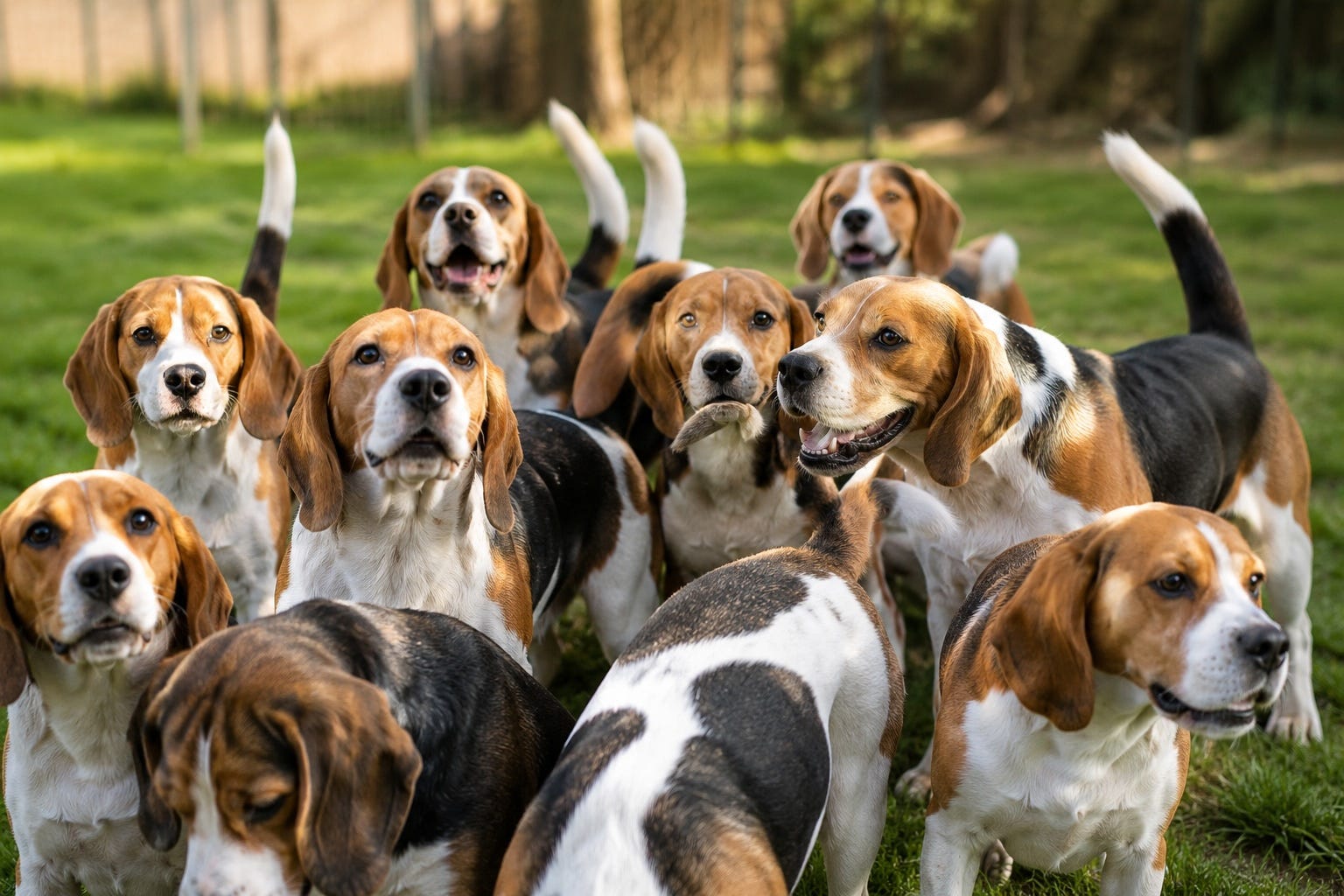
A Rescue Story That Reminds Us Why Every Dog Deserves a Chance
This week, animal welfare organizations announced that another 135 beagles are being removed from Ridglan Farms, a breeding and research facility in Wisconsin. Combined with earlier transfers, the total number of dogs rescued from the facility has now reached 1,635. Some of them have never walked on grass.
For dog lovers, that number is almost impossible to grasp. 1,635 beagles. 1,635 wagging tails. 1,635 dogs who may soon discover grass, couches, toys, family dinners, and the simple joy of belonging to someone.
The Fund For Animals
Besides breaking my heart, the news made me reflect on the beginning of my public relations career. One of my first clients was The Fund for Animals, founded by the actress and legendary animal advocate Gretchen Wyler. If her name sounds familiar, it may be because she famously persuaded actress Zsa Zsa Gabor to give up her mink coats, shining a spotlight on the cruelty of the fur trade.
One of the issues we focused on was ending vivisection, the use of animals in research and testing. It was, and still is, an emotional topic that sparks passionate debate. People on both sides point to science, ethics, and medicine to support their views. For me, however, my position has never changed. Animals should not be used in research. Period.

Years later, I wrote about the fight against animal research in my first memoir, I’m Not Single, I Have a Dog: Dating Tales From the Bark Side. At the time, I never imagined I would one day be writing about the rescue of more than 1,600 beagles from a research breeding facility. Yet here we are.
Why Beagles?
Many people are surprised to learn that beagles have long been among the most commonly used dog breeds in laboratory research. And it’s not because they are somehow the dogs closest to humans. Unfortunately, many of the same qualities that make beagles wonderful family pets have also made them appealing to research facilities.
Beagles have historically been chosen because they are relatively small, easy to handle, social with other dogs, and generally gentle and cooperative. Researchers also value the consistency of working with a breed whose health characteristics are well documented.
Anyone who has ever shared a home with a beagle knows they are affectionate, curious, and eager to be part of the family. They don’t ask for much. A warm place to sleep. A few treats. Someone to love. Which makes it all the more moving to imagine these dogs finally getting the lives they deserve.
Learning to Be Dogs
Many of the rescued beagles have spent their entire lives in breeding or research settings. Some have never played with a toy. Some have never climbed stairs. Some have never slept on a couch or curled up beside a person in bed.
Rescue organizations often describe a learning curve as former research subjects adjust to life outside the facility. Every day experiences that most dogs take for granted can feel completely new.
The first toy. The first car ride. The first time someone calls them a good dog. The first family. For many of these beagles, the rescue is only the beginning of their journey.
It’s All About The Dogs
The latest group of rescued dogs will be distributed among several organizations, including the Beagle Freedom Project in California, founded by Shannon Keith, an animal rights attorney and advocate whom I’ve had the pleasure of meeting. Others will go to Big Dog Ranch Rescue in Florida, where volunteers will love them until they are placed in adoptive homes.
That’s the part of the story I keep coming back to. Not the controversy. Not the lawsuits. Not the politics. The dogs.
I like the thought that somewhere tonight, a family may be preparing to meet a beagle who has never known what it means to belong. A dog who may be nervous. A dog who may be shy. A dog who may need patience. But also a dog who finally has a chance.
And if there’s one thing I’ve learned after a lifetime with dogs, it’s this: Dogs are remarkably forgiving. Give them safety. Give them kindness. Give them time. And they often find their way back to trust.
For more than 1,600 beagles, that journey has finally begun.
If this story touched your heart, please consider restacking it. Every restack helps more dog lovers discover BlissDog and spreads the word about the incredible resilience of dogs like these rescued beagles.
Thanks for reading BlissDog: Soul Stories About the Human–Animal Bond. Here, you’ll find stories about remarkable dogs, therapy dog adventures, rescue journeys, the lessons our animals teach us, and the extraordinary bond that connects us to them.
If you’re not already a subscriber, I’d love to have you join us. Subscribe for free to get new stories in your inbox and become part of a community that understands how much dogs shape our lives.
For readers who would like to support my work, my paid tier, Sit With Me, offers additional reflections and guided meditations inspired by the healing power of the human–animal bond.
And Now I’d Love to Hear From You
Have you ever adopted a rescue dog? What was the biggest adjustment they had to make—and what did they teach you along the way?
Until next time, give your dogs an extra hug from me, Seven, and Paige Turner. 🐾
My first dog (1967) was the offspring of a laboratory beagle. My dad worked at a lab. I was in first grade and back then we had no idea about any of this. I suppose maybe he did. Anyway I’m glad to think maybe I saved one beagle all those years ago.
I’m aware of the AI controversy.
My prayers to the Angels is that AI takes over the research and eliminates the use of ALL animals.
Thank you for continuing to shine a light on our precious Beagles Babies