

Dogs Get Dementia
What Shamrock’s Story, the Dog Aging Project, and Blondie Taught Me About Aging Brains in Canines

Dog Dementia Is Real — and Preparation Matters
Most people don’t know this. Dogs can develop dementia. The clinical term is Canine Cognitive Dysfunction (CCD) — the canine equivalent of Alzheimer’s disease in humans.

I learned this important truth while reading F. Barish-Stern’s book, Doggy Dementia & Alzheimer’s: Shamrock’s Story. The text evoked two feelings at once: heartbreak and urgency.
Because CCD isn’t rare.
According to research from the Dog Aging Project, more than 50% of dogs over the age of ten show at least one sign of cognitive decline. By age fifteen or sixteen, that number rises dramatically. And most families don’t recognize the signs until the disease has progressed.
What Is Canine Cognitive Dysfunction?
Canine Cognitive Dysfunction is a progressive neurodegenerative condition. Brain tissue changes. Proteins and plaque accumulate. Neural pathways degrade. The process mirrors many of the same pathological shifts seen in human Alzheimer’s disease.
Early signs can include subtle cognitive and physical changes:
A dog who once waited by the door now wanders aimlessly.
A once-social dog withdraws.
Sleep cycles reverse.
House-training falters.
Anxiety appears in a dog who had never been anxious before.
It’s easy to miss. Easy to rationalize. Easy to dismiss as “just aging.”
Barish-Stern writes lovingly about her dog, Shamrock, and CCD. It began in her body — she limped and stopped jumping — changes visible yet easy to dismiss. Then came the quieter losses: her tail no longer wagged, her favorite spot left untouched. She even stopped barking at strangers. Everyone assumed it was grief after the loss of Shamrock’s littermate, Clover.
It wasn’t grief. It was neurological.
What makes this book powerful is that the author doesn’t just tell Shamrock’s story. She also offers insights from more than fifty veterinarians, Alzheimer’s researchers, and canine health experts. The book translates science into something personal — and actionable.
This is not a call to panic. It is a call to preparation. As Barish-Stern emphasizes throughout the book, prevention is key.
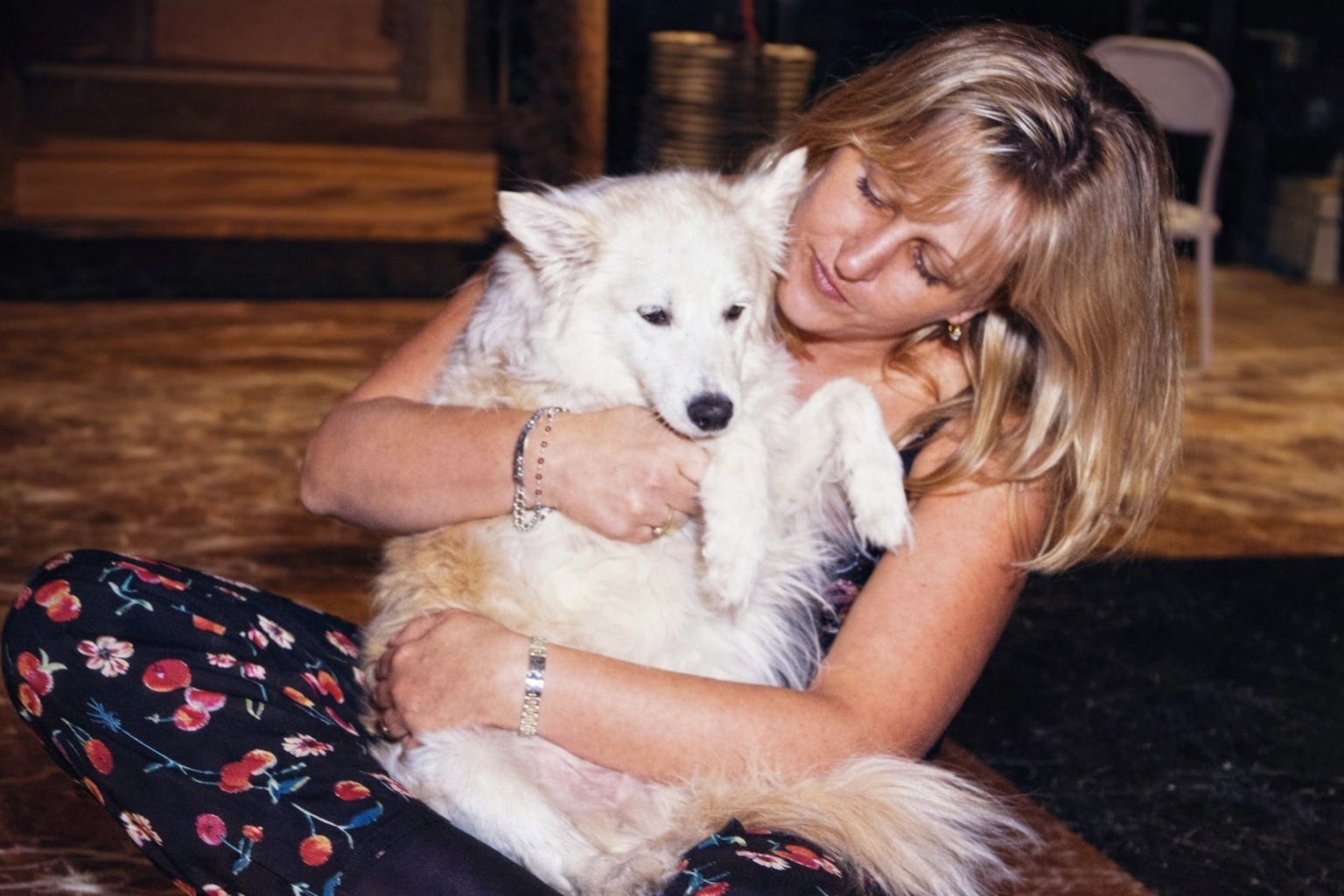
Blondie, a “Stroke,” and a Promise of Turkey
Reading this brought me back to Blondie, my first pound mutt as an adult. She was fifteen when she suddenly began leaning sideways as she walked. Her body tilted. Her balance was off. My veterinarian suspected a stroke and prescribed an anti-inflammatory.
Do dogs get strokes?
Yes, they can. They can also experience vestibular episodes that look dramatic but often improve. In senior dogs, inflammation in the brain, inner ear dysfunction, and vascular events can all mimic one another.
When we came home from the vet, I sat on the floor and held her in my arms, offering a slice of fresh turkey. She gobbled it down, despite clearly not feeling well. Blondie loved turkey. It was like a drug to her. Every Thanksgiving, she’d lose her mind at the smell, and I’d slip her a slice just to calm her.
After she finished, I looked into her eyes and told her the truth. If she needed to leave, I would understand. I told her I was sure heaven had turkey, but if she stayed with me, I would give her some every day.
The next morning, she rallied. She didn’t just recover. She lived four more years — and I kept my word. But the sudden recovery made me wonder. Was it the medication? Reduced inflammation? A vestibular event resolving? Or something less measurable — like the turkey she adored?
I still don’t know the answers to those questions. But here’s what I learned: neurological events in older dogs are not always the end. Cognitive changes are not character flaws. They are medical realities.
What matters is awareness.
The Science of Early Recognition
Canine Cognitive Dysfunction is progressive. When one sign appears, others often follow within a year. Early recognition matters.
Research suggests that lifestyle factors — including diet, environmental enrichment, physical activity, cognitive stimulation, and inflammation management — may influence brain health throughout a dog’s lifespan.
This isn’t just a conversation about senior dogs. Prevention begins in puppyhood. The “Power of Three,” emphasized in Barish-Stern’s book, is simple and powerful:
Prevention.
Early recognition.
Early intervention.
This may include veterinary-supervised supplements, environmental adjustments, enrichment activities, anti-inflammatory strategies, or medications as appropriate.
None of it erases aging, but it can slow decline and improve quality of life.
For the Love of Aging Dogs
When we don’t know that dogs can get dementia, we interpret behavior as stubbornness. Or confusion. Or personality change.
When we do know, we respond with compassion.
We stop saying, “What’s wrong with you?”
And start asking, “What’s happening in your brain?”
That shift changes everything.
Shamrock’s story is hard. Blondie’s story is tender. Both remind me of the same truth: Aging is not a failure. It is a stage. And loving a dog means loving them through every stage — including the neurological ones.
If you have a senior dog — or will one day — this is information worth knowing.
Because preparation is an act of love.
Your dog cannot advocate for their brain.
But you can.
Here’s a link for more information about F. Barish-Stern’s book, along with a link to purchase a copy. It’s also available on Amazon.
BlissDog by Susan Hartzler is a reader-supported publication exploring the human–animal bond and answering questions about the deeper meaning of life with dogs. If this work resonates with you, consider becoming a free or paid subscriber. Seven assures me this keeps the treat jar responsibly stocked.
20yrs or so ago we had a dog that was howling out the window and endlessly walking in circles. Nobody seemed to know much about it then and just called it ‘old age’. Thank you for educating readers about it. She lived in her own world until she was 17❣️
💗 Really love how you write about dogs -- I miss our dog, he was my best friend when I was a child.